
 |
| 
 Good quality
  Good material
  Good service
Welcome to the official website of Dalian Xinyi Steel Metal Surface Treatment Co., Ltd!
| Good quality Good material Good service

Dalian Xinyi Steel Metal Surface Treatment Co., Ltd
Contact: Manager Zhang
Telephone: 0411-39630390
0411-39569620
mobile phone:13795133932
website:en.dlxyg.com.cn
Address: No. 10, Shengsheng Second Road, Dalian Economic and Technological Development Zone
Office worker: Quanshui P3, Ganjingzi District, Dalian
Dalian sandblasting is a process that uses high-speed abrasive to clean, strengthen, deburr, or change the surface roughness of workpieces. Choosing the appropriate abrasive is a crucial step in sandblasting, which directly affects the processing effect, efficiency, and cost.
1、 Types and characteristics of abrasives
There are various types of abrasives, including metallic abrasives, non-metallic abrasives, and synthetic abrasives. Different abrasives have different hardness, shape, particle size, durability, and environmental friendliness, and need to be selected according to specific needs.
Metal abrasive
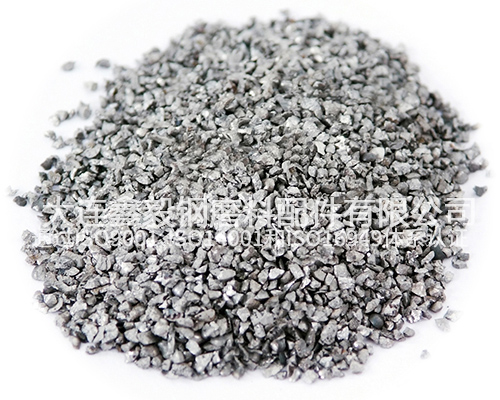
Steel grit: high hardness, good wear resistance, suitable for high-strength cleaning and strengthening treatment, such as removing thick rust, oxide scale or surface strengthening.
Stainless steel sand: It has good corrosion resistance and is suitable for materials such as stainless steel and aluminum alloys that are sensitive to corrosion.
Steel wire cutting ball: with a regular shape and high cleaning efficiency, commonly used for surface strengthening and deburring.
Non-metallic abrasive
Quartz sand: Low in price, but with low hardness, fragility, high dust content, poor environmental friendliness, gradually being phased out.
Garnet sand: Moderate hardness, uniform particles, low dust, good environmental friendliness, suitable for fine cleaning and surface treatment.
Glass beads: low hardness, smooth shape, suitable for surface polishing, deburring, and cleaning precision parts.
Synthetic abrasive
Alumina sand: high hardness, good wear resistance, suitable for high-strength cleaning and surface roughening treatment.
Silicon carbide sand: With high hardness and sharp particles, it is suitable for cleaning and fine processing of hard materials.
Plastic abrasive: Low hardness, suitable for cleaning soft metal or plastic workpieces, avoiding surface damage.
2、 The main factors to consider when choosing abrasives
Workpiece material
Hardness matching: The hardness of the abrasive should be slightly higher than that of the workpiece material to ensure effective cleaning or processing, but to avoid excessive damage to the workpiece surface. For example, for soft metals such as aluminum alloys, abrasives with lower hardness (such as glass beads or plastic abrasives) should be selected; For hard materials such as steel, abrasives with higher hardness (such as steel grit or alumina grit) can be chosen.
Corrosion resistance: For materials sensitive to corrosion such as stainless steel and aluminum alloys, abrasives with good corrosion resistance (such as stainless steel sand or garnet sand) should be selected.
Processing Requirements
Cleaning intensity: For stubborn dirt such as thick rust and oxide scale, it is necessary to choose abrasives with high hardness and strong impact force (such as steel sand or alumina sand); For fine cleaning or surface polishing, abrasives with lower hardness and uniform particles (such as glass beads or garnet sand) can be selected.
Surface roughness: The particle size and shape of the abrasive directly affect the surface roughness of the workpiece. Coarse grained abrasives (such as steel grit) can increase surface roughness and are suitable for applications with high coating adhesion requirements; Fine grained abrasives (such as glass beads) can reduce surface roughness and are suitable for precision parts or polishing treatments.
environmental friendliness
For occasions with high environmental requirements, abrasive materials with low dust and recyclable properties (such as garnet sand or glass beads) should be selected, and abrasive materials with high dust and harmful effects on the environment and health, such as quartz sand, should be avoided.
economy
The price and service life of abrasives directly affect processing costs. Although high hardness abrasives (such as alumina sand) are expensive, they have good wear resistance and can be reused multiple times, making them more economical in the long run; Low hardness abrasives (such as quartz sand) are inexpensive, but fragile and require frequent replacement, resulting in potentially higher overall costs.
device compatibility
The selection of abrasives also needs to consider the type and performance of sandblasting equipment. For example, some devices may not be suitable for using abrasives with high hardness, otherwise it will accelerate equipment wear.
3、 Abrasive selection for specific application scenarios
Surface cleaning
Clean the thick rust and oxide scale on the surface of steel: choose steel sand or alumina sand.
Clean the surface of stainless steel or aluminum alloy: choose stainless steel sand or garnet sand.
Cleaning plastic or soft metal surfaces: Choose plastic abrasives or glass beads.
surface strengthening
Surface strengthening of steel workpieces: choose steel grit or steel wire cutting pellets.
Surface strengthening of precision parts: choose glass beads or garnet sand.
deburring
Deburring of steel workpieces: choose steel sand or alumina sand.
Deburring of precision parts: choose glass beads or plastic abrasives.
Surface polishing
Polishing of metal surfaces: choose glass beads or garnet sand.
Polishing of Plastic Surface: Choose Plastic Abrasive.
4、 Precautions for using abrasives
Particle size control: The particle size of the abrasive should be selected according to the processing requirements, with coarse particles used for high-strength cleaning and fine particles used for fine processing.
Recycling: Some abrasives (such as steel grit and glass beads) can be recycled, but regular screening is required to remove broken particles and impurities.
Safety protection: During sandblasting, a large amount of dust and noise will be generated. Operators need to wear protective equipment, and the equipment should be equipped with dust removal devices.
Choosing the appropriate abrasive is the key to successful sandblasting processing. It is necessary to comprehensively consider factors such as workpiece material, processing requirements, environmental friendliness, economy, and equipment compatibility, and select abrasives with suitable hardness, particle size, and shape. By scientifically selecting and using abrasives reasonably, processing efficiency can be improved, costs can be reduced, and the surface quality of the workpiece can be ensured to meet requirements.

Office address: P3 Quanshui District, Ganjingzi District, Dalian
Factory address: No. 10, Shengsheng Second Road, Dalian Economic and Technological Development Zone
Copyright © http://en.dlxyg.com.cn/ Dalian Xinyi Steel Metal Surface Treatment Co., Lt Specializing inDalian sandblasting,Dalian shot blasting,Dalian blackened surface treatment,Welcome to inquire!
辽ICP备18004327号 Powered by Clouds platform Technical Support:Joint enterprise Era
 | Wechat scan Pay attention to our timely information |
 Online


