
 |
| 
 Good quality
  Good material
  Good service
Welcome to the official website of Dalian Xinyi Steel Metal Surface Treatment Co., Ltd!
| Good quality Good material Good service

Dalian Xinyi Steel Metal Surface Treatment Co., Ltd
Contact: Manager Zhang
Telephone: 0411-39630390
0411-39569620
mobile phone:13795133932
website:en.dlxyg.com.cn
Address: No. 10, Shengsheng Second Road, Dalian Economic and Technological Development Zone
Office worker: Quanshui P3, Ganjingzi District, Dalian
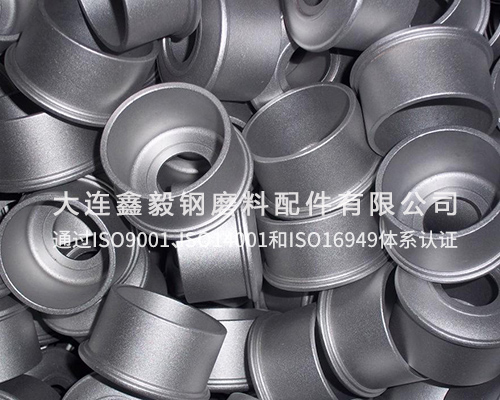
Dalian shot blasting is a process that uses high-speed projectile flow to impact the surface of a workpiece in order to achieve the purpose of cleaning, strengthening, polishing, or changing the surface morphology. The ultimate effect is not determined by a single factor, but by a complex system engineering, which is the result of the combined action of multiple factors such as equipment, process parameters, abrasives, workpieces, and personnel operations.
1、 Equipment performance is the foundation (hardware determines the upper limit)
Equipment is the cornerstone of shot blasting technology, and its performance directly determines the upper limit of processing capacity.
Shot blasting machine (core heart): This is the key part. The type (such as direct connection type, belt type), number of polishing heads, layout method, and key electrical power directly determine the blasting intensity and efficiency. High power shot blasting equipment can throw out projectiles at higher speeds, generating greater impact energy.
Projection speed and angle: The flight speed of the projectile is determined by the rotational speed of the shot blasting machine. The higher the speed, the greater the impact kinetic energy, and the stronger the cleaning and strengthening effect. The ejection angle affects the impact direction and coverage uniformity of the projectile, and needs to be adjusted according to the shape of the workpiece to ensure that all areas to be processed can be effectively impacted.
Equipment sealing and dust removal system: Good sealing prevents projectile leakage, ensures stable internal projectile flow, and is also related to production safety and working environment. An efficient dust removal system can promptly remove dust generated during the process, avoiding dust being repeatedly ejected onto the surface of the workpiece, affecting surface smoothness, and protecting internal components of the equipment from wear and tear.
2、 Process parameters are the soul (software controlled process)
On a given device, the setting of process parameters is the "formula" that achieves the expected effect.
Shot blasting time: too short, incomplete cleaning or insufficient strengthening strength; Over time can lead to excessive surface cutting, material loss, and even damage to the dimensional accuracy and surface quality of the workpiece (such as producing a "relief" effect).
Shot blasting intensity: Usually measured and calibrated using Almen strips. It comprehensively reflects the impact results of projectile velocity, mass, and hardness. Different materials and reinforcement requirements require different shot blasting strengths. Insufficient strength, shallow residual compressive stress layer, limited improvement in fatigue performance; Excessive strength may lead to surface micro cracks or even deformation.
Monitoring and assurance of coverage: Coverage refers to the percentage of projectile impact craters covering the surface of the workpiece. 100% coverage is not the endpoint, usually requiring a coverage of 200% or even 300% or more (i.e. each point is impacted multiple times) to ensure the uniformity and consistency of the reinforcement effect. Visual inspection or comparison using standard photos are common detection methods.
3、 Abrasive selection is key (ammunition determines characteristics)
Abrasive is a medium that directly contacts the surface of the workpiece, and its characteristics directly affect the machining effect and cost.
Material and hardness: Common abrasives include metal abrasives (such as cast steel pellets, steel wire cutting pellets, stainless steel pellets, etc.) and non-metal abrasives (such as ceramic sand, glass beads). The abrasive hardness should generally be slightly higher than the workpiece hardness in order to achieve effective cleaning and cutting. But for strengthening, hardness may cause surface damage.
Shape and size:
Spherical: such as cast steel pellets, with soft impact, mainly used for surface strengthening and finishing, can generate a uniform compressive stress field.
Angular sand: such as angular steel sand and quartz sand, with strong cutting ability and fast cleaning speed, but relatively rough surface, suitable for cleaning operations such as rust removal and oxide scale removal.
Size: Large sized projectiles have high impact energy and are suitable for strengthening thick oxide scales or requiring high strength; Small sized projectiles can achieve smoother surfaces, making them suitable for fine workpieces or situations requiring lower surface roughness.
Purity and service life: Impurities such as dust and broken particles contained in abrasives can seriously affect the cleanliness and quality of the processed surface. Regular screening is required to remove impurities, refine particles, and replenish new materials to maintain stable processing efficiency.
4、 The workpiece itself is a variable (object determines the solution)
The workpiece is the object of processing, and its characteristics determine that the process plan must be tailored to the specific needs.
Material and hardness: The material (such as aluminum alloy, cast iron, high-strength steel) and hardness of the workpiece determine the required shot blasting strength and abrasive selection. Soft material workpieces should use low strength, small-sized or non-metallic abrasives to avoid excessive cutting and embedding.
Original state: The initial condition of the workpiece surface, such as the degree of rust, thickness of the oxide layer, and the original coating, determines the main purpose of shot blasting (cleaning or strengthening) and the required process time and strength.
Geometric shape and structure: Complex shaped workpieces are prone to "shadow effects", where areas such as grooves and holes are difficult to be directly impacted by projectiles, requiring the design of special fixtures or the use of multiple throwing heads at different angles to ensure full coverage.
5、 Personnel and quality management are the guarantee (execution determines success or failure)
Even the best equipment and solutions require people to execute and monitor them.
Operator experience: Experienced operators can adjust equipment parameters in a timely manner based on the status of the workpiece, identify common defects (such as insufficient shot blasting, excessive shot blasting, pollution, etc.), and make preliminary judgments.
Process specifications and quality control: Standard operating procedures (SOPs) must be established to clarify the process parameters for each product. And regular testing and recording are carried out using tools such as Almen test pieces, surface roughness meters, metallographic microscopes, etc. to ensure stable and reliable processing results that meet technical standards.
In summary, the effect of shot blasting is a result of multivariate coupling. Equipment provides possibilities, process parameters set paths, abrasive is the executing tool, workpiece is the processing object, and personnel are the link that integrates all elements and ensures their correct execution. To achieve stable, ideal, and repeatable shot blasting effects, systematic analysis, optimization, and strict control must be carried out from these five dimensions, all of which are indispensable.

Office address: P3 Quanshui District, Ganjingzi District, Dalian
Factory address: No. 10, Shengsheng Second Road, Dalian Economic and Technological Development Zone
Copyright © http://en.dlxyg.com.cn/ Dalian Xinyi Steel Metal Surface Treatment Co., Lt Specializing inDalian sandblasting,Dalian shot blasting,Dalian blackened surface treatment,Welcome to inquire!
辽ICP备18004327号 Powered by Clouds platform Technical Support:Joint enterprise Era
 | Wechat scan Pay attention to our timely information |
 Online


